


Tales of the Topline
For those who know how to look, the topline of a horse is one of the clearest chapters in the horse’s story. From the poll, along the neck, across the back and over the hindquarters, the topline quietly reveals how a horse has been worked, developed, and asked to carry itself.
A healthy, well-developed topline does not happen by accident. It is the result of correct training that encourages the horse to work from back to front, engaging the hindquarters, lifting through the back, and carrying itself in balance. When a horse moves this way, the muscles along the topline become rounded, supple, and strong. The neck appears to flow smoothly out of the shoulder, the back looks lifted rather than hollow, and the horse gives the impression of ease and self-carriage.
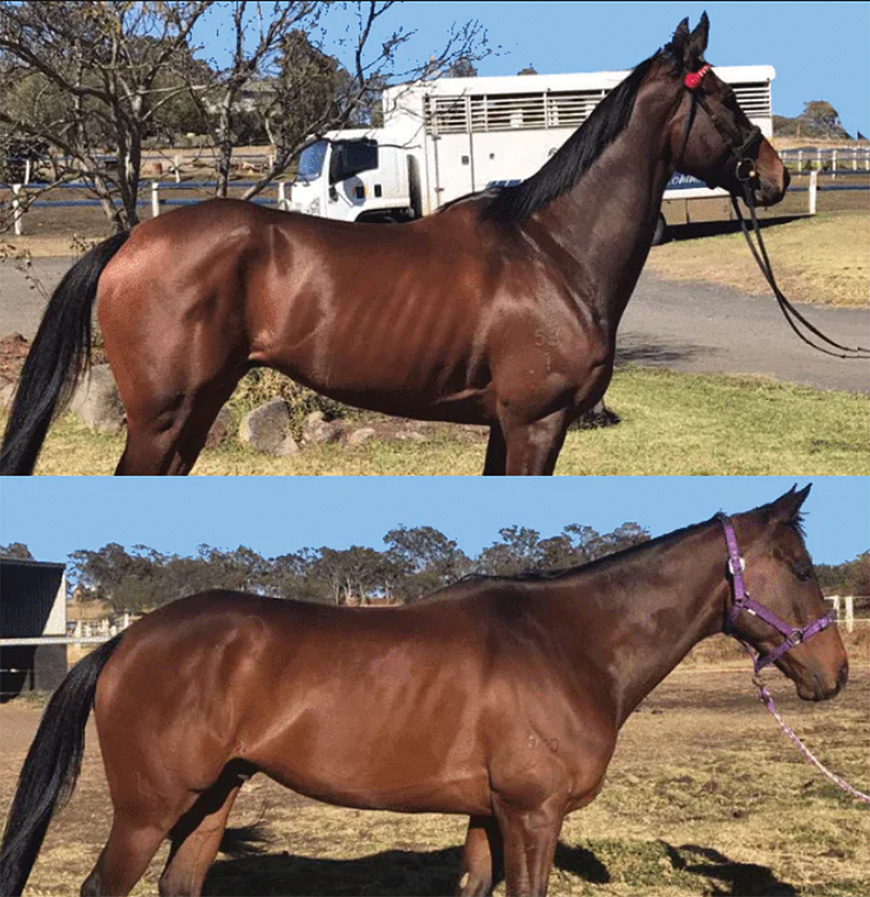
Self-carriage is the key word here. A horse that is truly in self-carriage does not rely on the rider’s hands for balance. Instead, it steps under with the hind legs, transfers that energy through a swinging back, and allows the forehand to lighten. Over time, this way of going builds the muscles that support the spine, creating that desirable, softly rounded topline that riders across disciplines value.
By contrast, a flat or underdeveloped topline often tells a very different tale. Horses that have been ridden primarily from front to back—held together by the reins rather than pushed forward by the hindquarters—tend to develop a flat neck, a hollow back, and little muscle along the topline. You may see a neck that looks upside down, with bulk underneath rather than along the crest, and a back that dips instead of lifting. This isn’t a cosmetic issue; it’s a biomechanical one.
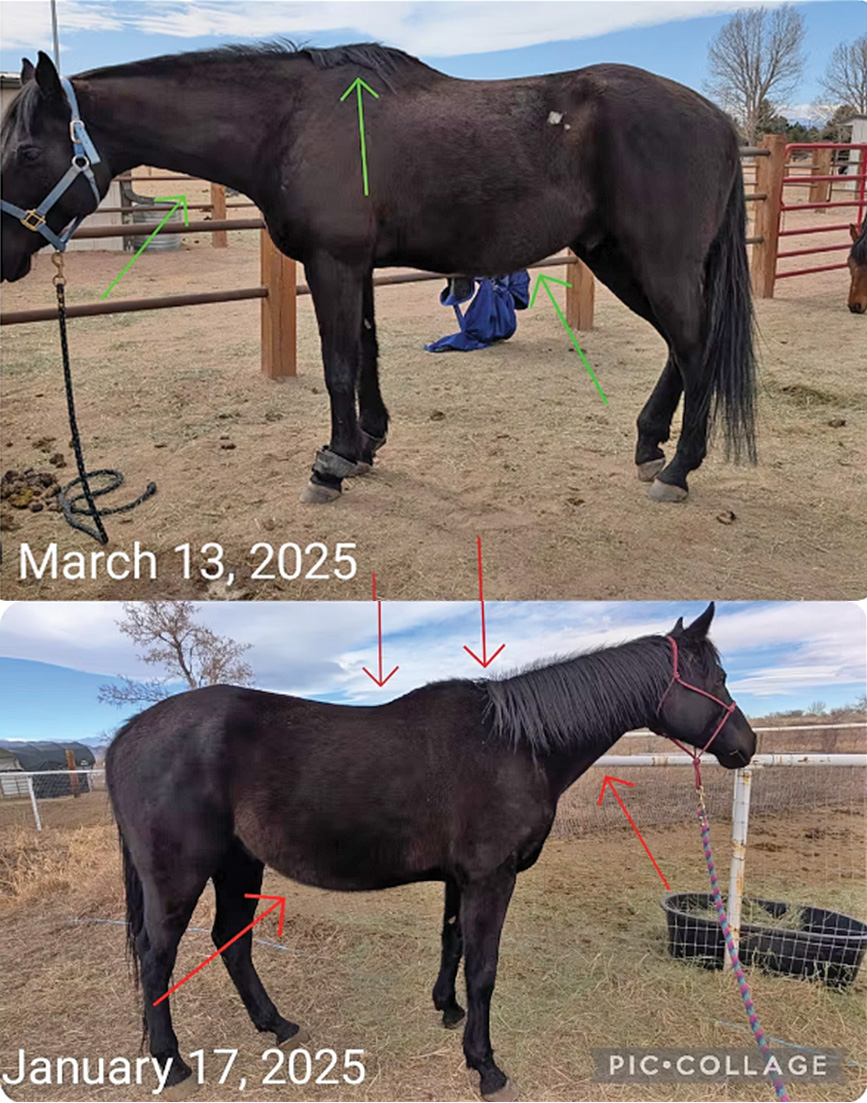
When a horse moves without engaging its core and hind end, the back cannot lift to support the rider’s weight effectively. Over time, this can lead to stiffness, discomfort, and even soundness issues. The topline, or lack of it, reflects not just how the horse looks, but how it feels in its body.
It’s also important to remember that developing a topline takes time, patience, and consistency. No gadget or shortcut can replace correct, thoughtful riding. Transitions, correct bending, steady rhythm, and allowing the horse to move forward into a soft contact all contribute to building the muscles that support self-carriage. Even work in hand, groundwork, and turnout play a role in encouraging natural movement patterns that support a healthy topline.
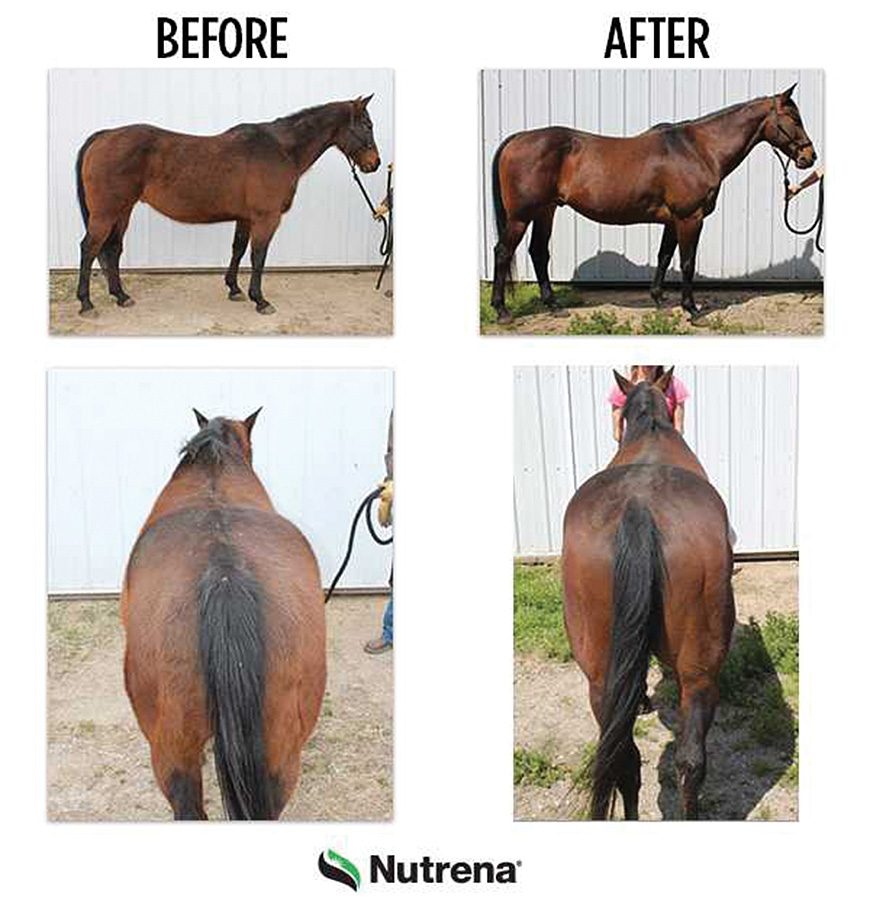
Ultimately, the topline is more than a visual marker; it is a conversation between training, balance, and wellbeing. By learning to read the “tales” written along a horse’s back, riders can gain valuable insight into how that horse has been worked and how it might be worked better. A rounded, lifted topline tells a story of strength and harmony. A flat, hollow one is an invitation—to listen, adjust, and ride with the horse’s long-term health in mind.
-----------------
'From the Trainer's Eye articles written by Jen Jonas of Jonas Performance Horses and one of her students, Sharon Jones of Be A Better You Inc. Both Jen and Sharon are believers in continuous learning - if you're not learning you are not growing'