

When Show Season Hits a Bump in the Road.
Jen: One of the most frustrating things that can happen to a competitor is having their horse become injured or sick just before, or right in the middle of, show season.
All winter long, we prepare. We school manoeuvres, refine cues, build confidence, work on fitness, and set goals. Horse and rider spend months learning, improving, and getting ready for those first competitions of the year.
Then suddenly, Neddy comes up lame. Or colics. Or develops an abscess. Or pulls something in the field – a ligament or a shoe
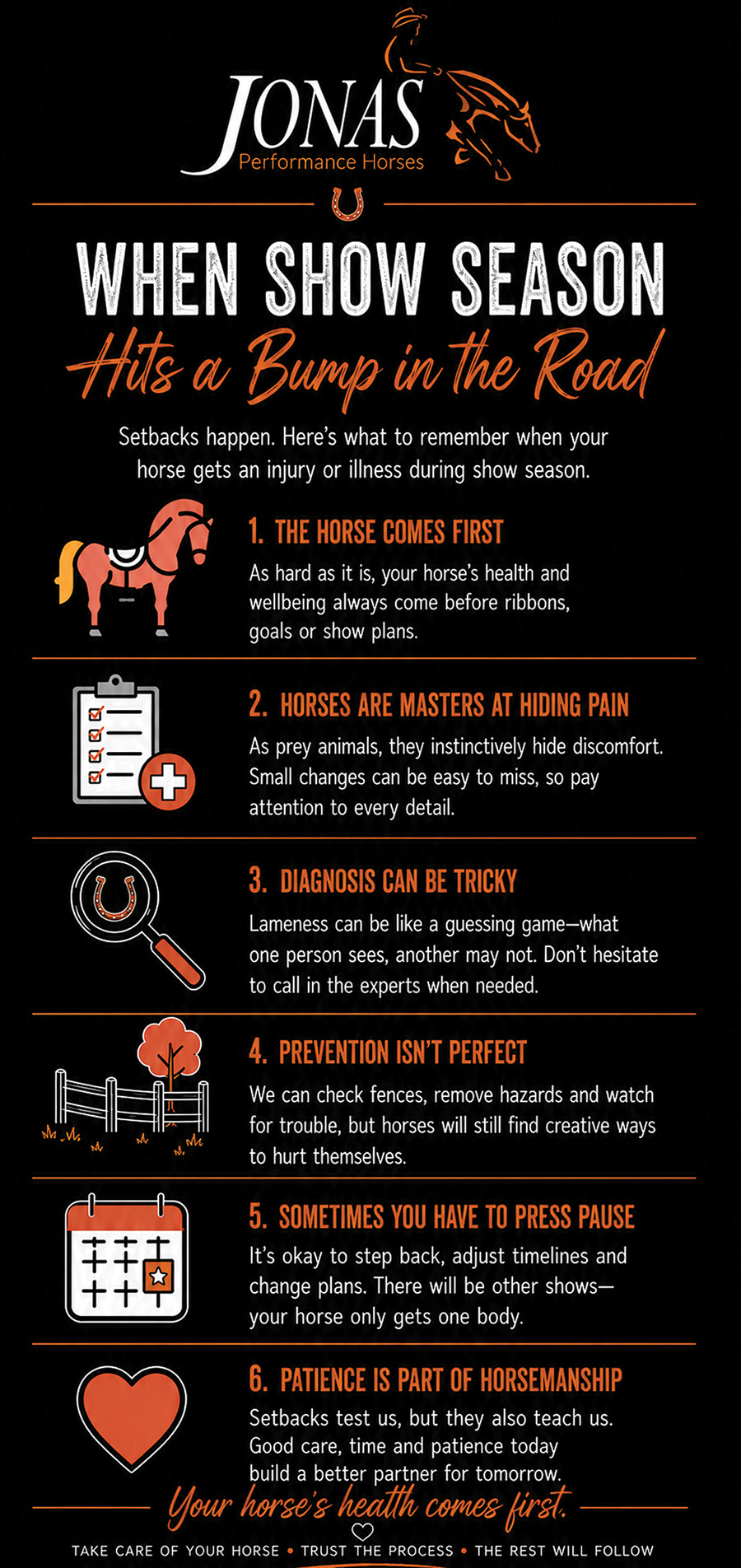
As a trainer and coach, I feel awful for my clients when this happens. I know how much time, effort, and emotion they have invested. But the horse's health must always come first, and thankfully my clients understand that.
In our partnership with our horses, the horse is the athlete. The rider is the navigator, the strategist, and the cruise director, responsible for deciding where to go and how fast to get there. But without a healthy athlete, there is no competition.
One of the challenges with horses is that they seem remarkably talented at finding new ways to hurt themselves. I can bring a horse in from morning turnout and immediately notice something isn't right. Perhaps there's a slight limp or an unusual stride.
The next challenge is figuring out what's actually wrong.
If you've ever asked a group of horse people to watch a horse jog, you'll know that opinions can vary wildly. One person thinks it's the left front. Another says right hind. Someone else suggests a shoulder issue. Sometimes the signs are obvious, often they are not.
Horses are masters at hiding discomfort. As prey animals, showing weakness in the wild could make them vulnerable. Even today, many horses will continue to work despite being uncomfortable, making diagnosis more difficult.
I pay close attention to every horse as it comes in from turnout. The paddocks are regularly checked for hazards, broken fencing, holes, and toxic plants. Yet despite our best efforts, horses occasionally manage to injure themselves anyway.
Sometimes you need an experienced veterinarian, farrier, body worker, or lameness specialist to help identify the problem and create a plan.
Sharon: I can relate to this all too well because I'm currently living it.
My mare has struggled with front-foot issues for the past year. Changing farriers helped significantly, but despite the improvement, she still requires specialized shoeing to keep her comfortable and performing at her best.
Like many riders, I'd been looking forward to show season. The training was going well, and we were making progress. Then came the familiar worry when she started showing signs of discomfort again.
It's frustrating because horses can't tell us exactly what hurts. We become detectives, watching every step, looking for clues, consulting professionals, and hoping we find answers.
What I've learned through this experience is that patience is part of horsemanship.
We can control our preparation, our training plans, and our goals. What we can't control is every bump, bruise, strain, or setback that comes with owning a thousand-pound animal.
Sometimes the best thing we can do is press pause.
Show seasons come and go. There will always be another class, another competition, another opportunity to ride down the centre of the arena.
Our horses don't care about buckles or year-end standings.
They care about comfort, good care, and the people who put their wellbeing ahead of their own ambitions.
That's a lesson worth remembering whenever show season hits a bump in the road.
-----------------
'From the Trainer's Eye articles written by Jen Jonas of Jonas Performance Horses and one of her students, Sharon Jones of Be A Better You Inc. Both Jen and Sharon are believers in continuous learning - if you're not learning you are not growing'